


Business | Network Integration (NI)
Network Integration (NI)
AI-driven real-time fault
monitoring automation tools
AS-IS
Manual infrastructure care
Operations rely on people, focusing on network-centric systems
monitored through NMS while network staff
manually operate and respond to faults
which limits their response capabilities.

Communication
Operations
target systems

NMS
Limited
fault-focused management

Cooperation
People-led
fault response
TO-BE
Human + automation tooling
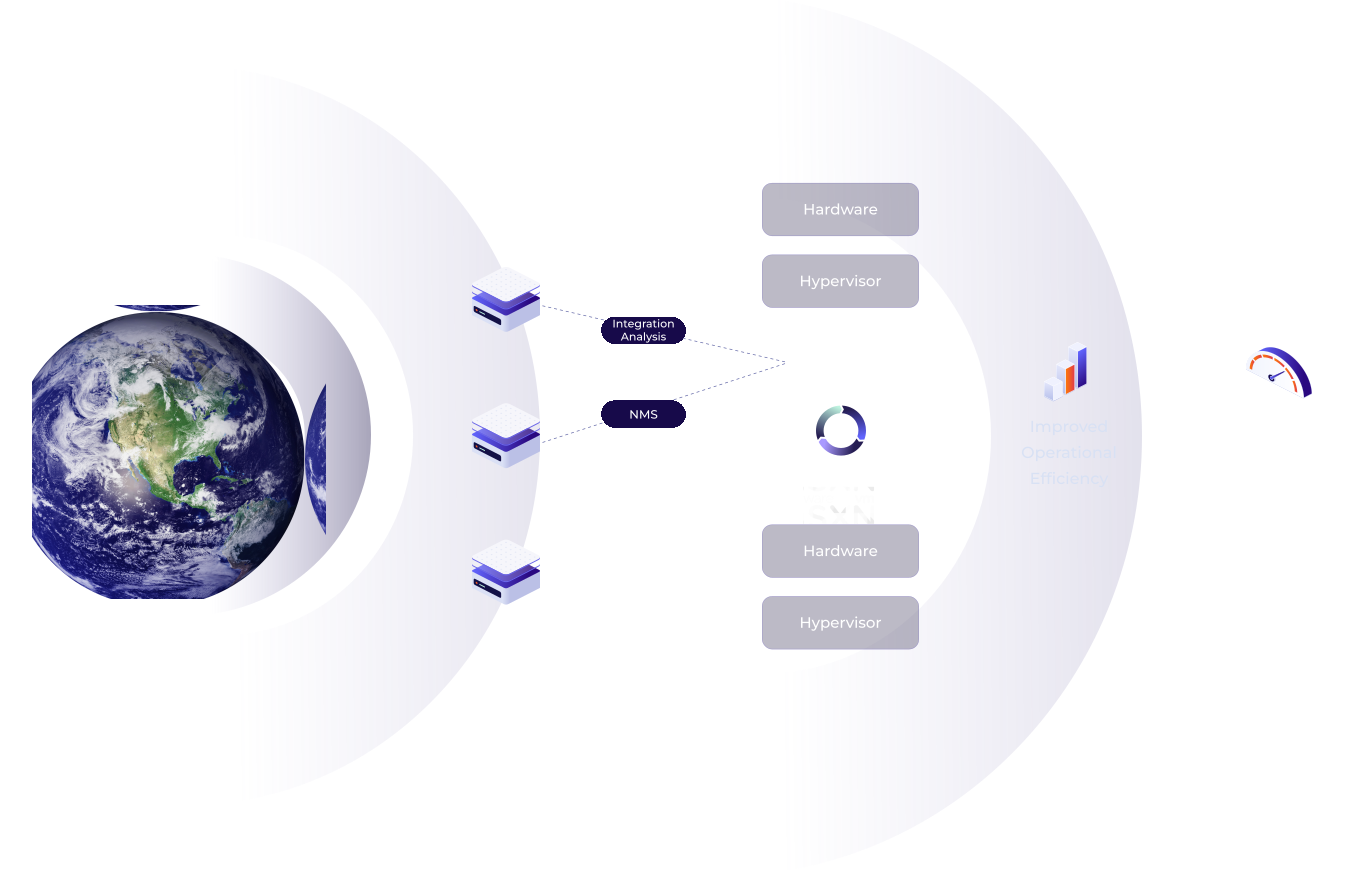
Combining people with automated tasking tools lets us centrally manage operational systems, syncing network analytics, NMS, and hypervisors
(Apstra, NSX) via APIs and leveraging IBA monitoring to deliver next-gen unified automation.
Leading AI-driven shifts
in network operations management
Automating the entire fabric lifecycle from design to operations
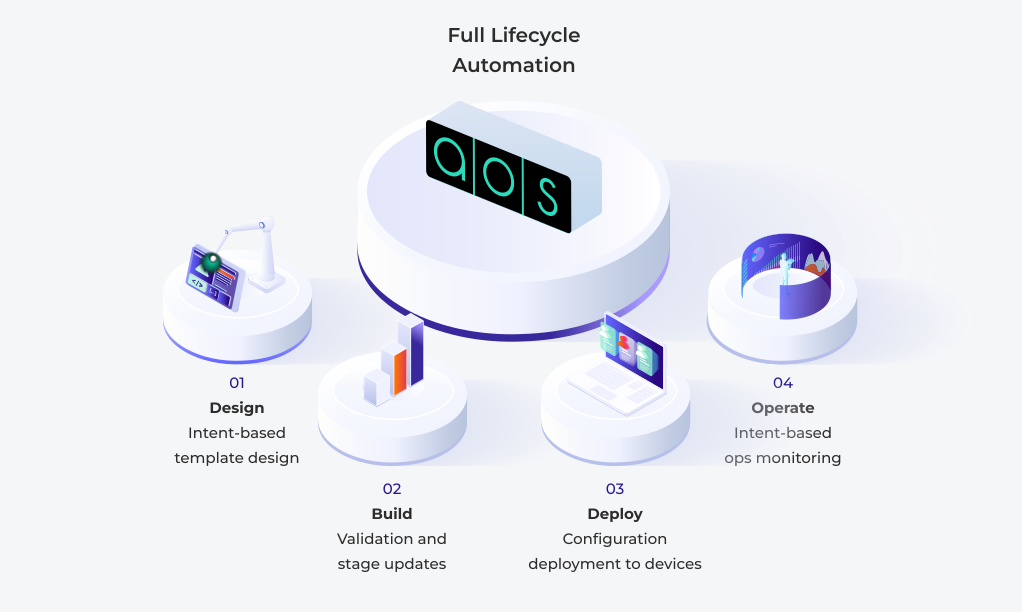
• Network topology templates
• Rack layout, quantities,
and physical cabling,
and server structure definitions
• Enter real-world information
into topology templates
• Apply settings for your system
• Enter device information
• ZTP auto-configuration
• VM-based networking
• Intent-based rendering
Fabric auto-configuration
• Detect anomalous behavior
and notify user after analysis
• Zero-downtime expansion
Auto network configuration
Don't hesitate to adopt AI
and lead technological innovation
The vision AI offers is compelling, but it also carries clear risks. That's where AI governance comes in as a necessary safety net. AI is vulnerable to human bias and error, so a structured, systematic approach is needed to mitigate potential risks. AI governance provides this by establishing processes, standards, and safeguards to ensure AI activities align with ethical standards and societal expectations. A well-designed AI governance oversight process prevents and addresses risks like bias, privacy violations, and misuse, while fostering both innovation and trust.
Whynet pursues responsible AI that goes beyond legal compliance to include social responsibility. We will protect customers and technology from financial, legal, and reputational risks, and continue to support trustworthy growth.

AI's purpose is to
enhance human capabilities.

Data and insights are
the customer's rights and assets.

AI systems must be transparent
and explainable.
A framework for
responsible AI governance
| Task | Ensure Stable Operations | Manage Risk & Build Trust | Strengthen Regulatory Compliance | Meet Stakeholder Needs |
|
Planning (Planning) |
Define key metrics to measure AI adoption across the organization. |
Review existing processes for AI fairness and explainability checks. |
Analyze gaps between current and potential AI regulations. |
Review responsible AI competencies and align with business goals. |
|
Build (Build) |
Ensure traceability and auditability of existing processes. |
Operate updated processes and checks throughout the AI lifecycle. |
Create and ensure accessibility of model documentation. |
Assign roles, capabilities, and learning tasks for responsible AI implementation. |
|
Operate & Generate (Operate & Generate) |
Establish automated documentation and management for model metadata. |
Continuously validate AI fairness, explainability, quality, and governance. |
Support an environment for burden-free compliance. |
Build scalable and sustainable workflows with stakeholder approval. |
Risk Management

Differentiated compliance items by risk level
* Mandatory Compliance
* Follow existing procedures
High Risk
Medium Risk
AI Governance Framework
01
AI
Strategy
02
Risk
03
Process
04
Oversight
05
Monitoring
Based on the EU AI Act's risk management framework, we apply differentiated compliance requirements
and reflect domestic financial authorities' laws and regulations to protect customers from AI risks.
Compliance
When designing and operating AI services and systems, it is necessary to analyze AI-related laws, institutions, and regulatory frameworks applicable domestically and internationally, and to reflect the specific compliance matters and standards required by law. It is also necessary to establish and consistently apply guidelines for each stage of planning, development, and operation by referring to domestic and international standards for key AI attributes such as fairness, performance, and explainability.
Phased System Establishment
To ensure that networks and IT infrastructure are stably managed throughout the entire lifecycle of planning, building, operating, and improving, it is necessary to apply phased AI governance based on the lifecycle, and to provide services that satisfy stability, scalability, and security by operating a standardized governance system throughout the entire process of real-time monitoring, log collection/analysis, and update and replacement management.
Want to learn more about our business?

System Integration
System Integration (SI)

Network Integration
Network Integration (NI)

System Management
Operations & Maintenance (SM)

Security
Security

Solution
Service Provider ·
Data Center

Solution
Campus ·
Enterprise

Solution
AI · Automation

Solution
NPU